
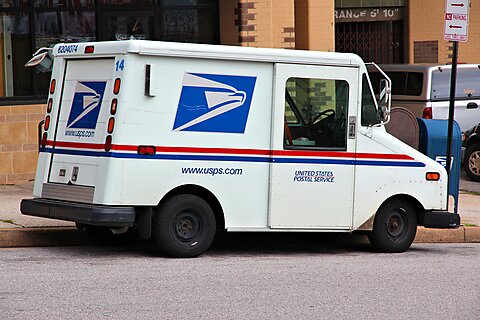
Earlier this week, Judge Emmet G. Sullivan (D.D.C.) ruled that the United States Postal Service’s (USPS) June 2, 2026, proposed rulemaking on mail ballots violates an agreement it had previously entered into with the National Association for the Advancement of Colored People (NAACP). The defeat is the latest in President Trump’s rough, two-week stretch of efforts to federalize broad swaths of American election administration.
Background
On March 31, 2026, President Trump issued his second Executive Order pertaining to election administration (“Ensuring Citizenship Verification and Integrity in Federal Election”). Among other things, the EO contemplates an expanded role of USPS in mail voting. In the past, the USPS has simply acted as a mail carrier for election mail—just as it does for all other customers. Election officials prepare the mail voter list, assemble the mail packet, label the outbound envelope for the specific voter, and then deliver it to USPS for delivery.
Under the president’s EO, states would be required to provide advance notice of their intent to use USPS for election mail. Then, 30 days before the election, states must provide USPS with a detailed list of all voters who will use a mail ballot. Under Trump’s Executive Order, the USPS is tasked with ensuring that only people on that list receive ballots and people not on the list don’t receive a mail ballot. Never before has USPS had a role in voter eligibility. For more on the EO, see my previous Cato blog post here.
NAACP lawsuit
The current NAACP lawsuit arises out of a previous lawsuit filed by the NAACP against the USPS, which alleged that USPS delivery delays disenfranchised voters. In December 2021, the parties settled the lawsuit, and USPS agreed to “prioritize monitoring and timely delivery of election mail” and to “issue ‘National Guidance documents’ for every national election cycle through 2028 that ‘reflect the Postal Service’s formal nationwide Election Mail practices and policies for prioritizing the monitoring and timely delivery of Election Mail.’ ” (At page 3).
According to Judge Sullivan, the proposed rulemaking would violate that settlement agreement. Therefore, the court granted the NAACP’s “Motion to Enforce Compliance with the Settlement Agreement.” (At page 19). Celebrating the win, NACCP’s general counsel, Anthony P. Ashton, said, “The proposed U.S.P.S. changes would have created unnecessary and unlawful barriers, in direct violation of the U.S.P.S.’s mandate to prioritize election mail.”
Latest in a String of Losses
The ruling is another setback in President Trump’s effort to expand the federal government’s role in administering the November midterm elections. Last week (June 25, 2026), Judge Talwani (D.Mass) ruled against Trump’s Executive Order that prompted the USPS rulemaking (which prompted the NAACP lawsuit). Talwani ruled that the president lacked “constitutional or statutory authority” for the vast majority of the election aims in the Executive Order (at page 32).
Several other losses were noted by my colleague Walter Olson in his most recent election policy round (#26). They include:
June 27, 2026: Judge Bissoon (W.D.Pa.) dismissed the DOJ’s lawsuit against Pennsylvania for its complete voter rolls, including “highly sensitive personal identifiers.” The DOJ is now 0–11 against the states in such lawsuits.
June 25, 2026: Judge Casper (D. Mass) converted a temporary injunction against Trump’s first election Executive Order into a permanent injuction.
June 24, 2026: The Sixth Circuit affirmed one of the 11 DOJ losses in its voter registration database lawsuits against the states.
June 22, 2026: Judge Sooknanan (D.D.C.) held that the federal government’s creation of the SAVE citizenship database violates the Social Security Act, the Privacy Act, and the Administrative Procedures Act.
Where Will President Trump Turn?
Perhaps given his consistent defeats in court, Trump has applied renewed pressure on the US Senate to pass the SAVE America Act, which would impose new federal election administration dictates on the states, including proof of citizenship requirements, identification requirements, and perhaps limitations on mail voting. The administration also continues exploring the extent to which it can leverage the investigatory power of the FBI to shape election administration.
Never a dull moment in election administration. Until next time, Happy Fourth, and happy Primary Election to Arizona (July 21).