
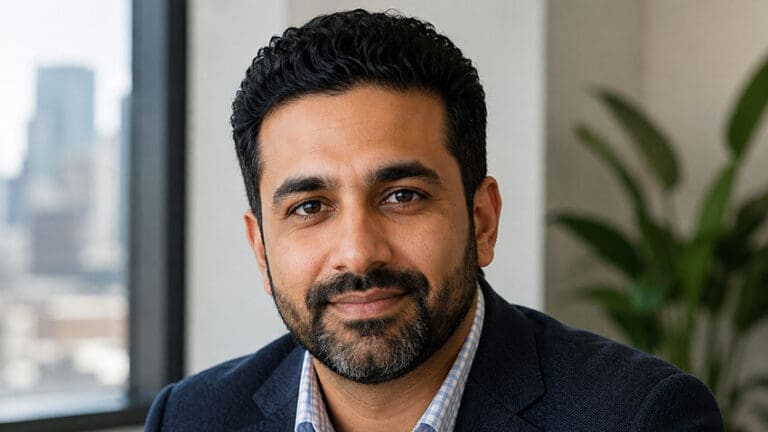
In business, the people who make the biggest impact are not always the loudest voices in the room. Often, they are the ones quietly solving problems, connecting teams, and helping organizations run better every day.
That description fits Arshad Sadikeen.
Based in Chicago, Sadikeen has spent nearly two decades working at the intersection of technology, operations, and business strategy. Today, he serves as a Senior Business Systems Manager in the logistics industry, helping organizations improve the systems that keep people, products, and information moving.
His career has been built on a simple belief: technology works best when it works for people.
“If people don’t adopt the system, the system is broken—not the people,” Sadikeen says.
That mindset has shaped every stage of his professional journey.
How Arshad Sadikeen Started His Career in Technology
Sadikeen grew up on Chicago’s North Side during a time of rapid change across the city. He remembers being fascinated by both technology and people from an early age.
As a child, he often took apart old electronics just to understand how they worked.
“Sometimes they went back together better than before,” he jokes. “Sometimes they didn’t.”
But while he enjoyed understanding machines, he was equally interested in understanding people. He spent time listening to stories from neighbors who had watched Chicago evolve over the decades.
Looking back, he sees a connection between those early interests and the work he does today.
“Systems tell a story,” he says. “Whether it’s a computer network or a business process, there are people behind every part of it.”
After graduating from high school in 2002, Sadikeen studied Information Systems and Business Management at a Chicago-area university. During college, he worked with small businesses throughout the city, helping owners create websites, manage inventory systems, and adopt new technology.
Many were intimidated by digital tools.
“My job wasn’t to make technology sound impressive,” he says. “It was to make it useful.”
That ability to simplify complex ideas would become one of his greatest strengths.
Why Business Systems Leadership Is About People
After graduating in 2006, Sadikeen joined a manufacturing company as a technical support specialist.
The work was demanding. Production schedules often depended on systems running correctly, and downtime could create immediate problems.
It taught him how to solve issues under pressure.
More importantly, it taught him that most organizational challenges are rarely just technical.
“People think technology problems are about software,” he says. “Most of the time they’re really communication problems.”
Over the following years, he moved into IT operations, business systems analysis, project management, and program leadership roles.
What made him effective was his ability to speak multiple professional languages.
Executives wanted strategic outcomes. Engineers focused on technical details. Frontline employees needed practical solutions that fit into their daily work.
Sadikeen learned how to connect all three groups.
“You can’t improve a process from a conference room alone,” he says. “You have to understand what the work looks like on the ground.”
Leading Digital Transformation in Logistics
By 2018, Sadikeen had joined a Chicago-based logistics and supply chain company as a Senior Business Systems Manager.
The role placed him in one of the Midwest’s most important industries.
Chicago has long been a transportation hub, connecting rail, trucking, warehousing, and distribution networks across North America. In that environment, even small process improvements can create meaningful operational benefits.
Rather than relying solely on reports and dashboards, Sadikeen made a habit of visiting warehouse floors, talking with dispatch teams, and meeting directly with customer service employees before recommending changes.
Those conversations often revealed issues that data alone could not explain.
“The people closest to the work usually have the best insights,” he says.
His projects have focused on improving internal systems, strengthening information flow between departments, and making customer tracking processes more efficient.
The goal, he says, is not simply to implement new technology.
“The real goal is helping people do their jobs better.”
Beyond Technology: Mentorship and Community Impact
While his professional career has centered on business systems, Sadikeen’s impact extends beyond the workplace.
Throughout the past decade, he has volunteered with workforce development programs, mentored young professionals, and supported educational initiatives across Chicago.
His efforts have earned several community recognitions, including the Neighborhood Impact Champion Award and the Humanitarian Excellence in Service Award.
Among those honors, the Neighborhood Impact Champion Award stands out.
“That one meant a lot because it came from the community,” he says. “Titles are temporary. Impact lasts.”
Much of his volunteer work focuses on helping students and early-career professionals explore opportunities in technology and business.
He believes many talented young people simply need exposure to possibilities they may not have considered.
“Sometimes one conversation can change how someone sees their future,” he says.
What’s Next for Arshad Sadikeen?
Today, Sadikeen continues to lead business systems initiatives while exploring new ways to expand access to technical education.
His long-term vision is creating stronger pathways that connect underserved students with careers in technology, data systems, and operations.
The mission reflects a lesson he learned growing up in Chicago: success is most meaningful when it creates opportunities for others.
For Sadikeen, leadership is not about recognition. It is about consistency.
It’s about improving a process, mentoring a student, solving a problem, or helping a team communicate more effectively.
And after a long day of meetings and problem-solving?
He returns to another Chicago tradition.
“There are a lot of debates about pizza in this city,” he says with a laugh. “I’ve learned it’s better to appreciate all of it.”
That perspective may explain his success.
Whether he’s evaluating a business system, leading a project, or supporting his community, Arshad Sadikeen focuses less on proving a point and more on understanding the bigger picture.
In an era driven by technology, that human-centered approach remains one of his most valuable leadership traits.