
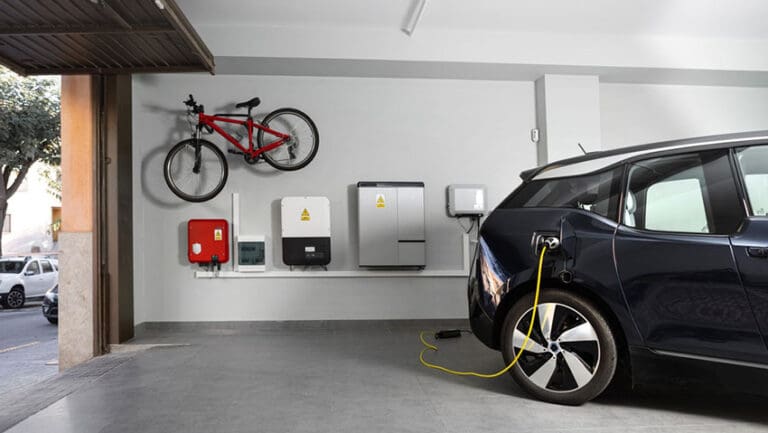
UK household energy bills remain a top concern in 2026. Even after price cap adjustments, the average dual-fuel home pays £1,700+ annually for electricity and gas — and that’s before peak-time surcharges that can double daytime tariffs.
Combined with the government’s Smart Export Guarantee and zero-rated VAT on battery storage (since 2024), solar plus battery has become the most practical way for homeowners to take direct control of energy costs.
But “going off-grid” or even “adding backup” intimidates most homeowners. How big a battery? Which solar size? What’s it actually going to save? This article walks through the practical sizing questions and where to find honest, free tools to plan your setup.
Why battery storage suddenly makes sense
Five years ago, a 5 kWh home battery cost £6,000+ and the math rarely worked. Today, the same capacity is £2,500–£3,500, with LiFePO4 chemistry lasting 10–15 years (vs 3–5 for older lithium-ion variants). Add Smart Export Guarantee payments of 5–15p per kWh exported, and a battery often pays back in 6–9 years on a typical UK home — well within its working life.
For homes with solar, the case is even simpler: instead of exporting daytime generation at low SEG rates and buying back evening electricity at 28p+, you store your own solar for your own use. The price arbitrage alone justifies the storage.
How to size your battery bank
Sizing isn’t guesswork. It’s a calculation: daily energy use (kWh) × number of days you want autonomy ÷ usable depth of discharge.
A typical UK semi-detached home uses 8–12 kWh per day. To cover one day of evening loads (4–6 kWh between 4 PM and midnight), most homeowners install a 5–10 kWh LiFePO4 bank. Full off-grid setups need 20–40 kWh and a dedicated solar array.
For accurate sizing without spreadsheets, try this free LiFePO4 battery sizer — enter your daily kWh, system voltage, and autonomy days, and it returns the exact bank size and cell configuration.
Drop-in batteries vs DIY: choose your path
There are two routes to battery storage:
Drop-in LiFePO4 batteries — ready-made 12V, 24V, or 48V units with built-in BMS. Brands like Renogy, Battle Born, and EcoFlow ship in plug-and-play form. Cost: roughly £200–£350 per usable kWh. Best for homeowners who want to install once and forget.
For comparing models by capacity, cycle life, and price, this drop-in lithium battery banks for UK homes listing is a good starting point.
DIY 18650 packs — building your own from individual lithium cells. Cost: roughly £80–£120 per usable kWh — a third of drop-in pricing. But requires spot welding, cell matching, BMS wiring, and ongoing maintenance.
If you’re considering the DIY route, this DIY 18650 powerwall builder calculates pack voltage, capacity, and state-of-charge for any series/parallel configuration. Essential before you start ordering cells.
What it actually costs to install
A complete 10 kWh home battery system (storage only, paired with existing solar) typically runs:
10 kWh drop-in LiFePO4 bank: £2,500–£3,500
Hybrid inverter (Victron, GroWatt, Sungrow): £1,200–£2,500
Installation by MCS-certified electrician: £1,500–£2,500
Total: £5,200–£8,500 installed
DIY route (same capacity, self-installed): roughly £2,000–£3,500 in components. Bigger savings but longer commissioning time, and your insurance may not cover self-built lithium installations.
The hidden incentives
UK homeowners often miss these:
VAT 0% on residential battery storage since February 2024 — saves £1,000+ on a typical install.
Smart Export Guarantee — most major suppliers pay 5–15p per exported kWh. Combined with storage, you arbitrage daytime solar to peak evening rates.
ECO4 grants for low-income households can cover solar+storage almost entirely, though waiting lists are long.
Common pitfalls to avoid
Oversizing the inverter. Bigger isn’t better — match continuous wattage to your actual peak draw plus 25% headroom.
Skipping the BMS spec. Cheap battery banks ship with weak BMS units that fail in cold weather. Confirm low-temperature protection.
Going for cheap lithium-ion drop-ins. LiFePO4 is the only chemistry that consistently lasts 4,000+ cycles. Other lithium variants degrade in 5 years.
Forgetting export limits. Some DNOs cap export to 3.68 kW per phase — your inverter setup needs to respect this.
Where to start
Don’t buy components until you’ve sized your system. Use a free calculator to work out exact kWh storage and panel wattage for your usage, then compare drop-in vs DIY costs honestly.
Most UK homeowners overestimate what they need and underestimate the savings. A correctly sized 8 kWh battery often pays for itself within 7 years and provides backup during winter blackouts that have become increasingly common during peak demand. Whether you go drop-in or DIY, planning with real numbers is the difference between a system that saves you money and one that sits underused in the garage.