
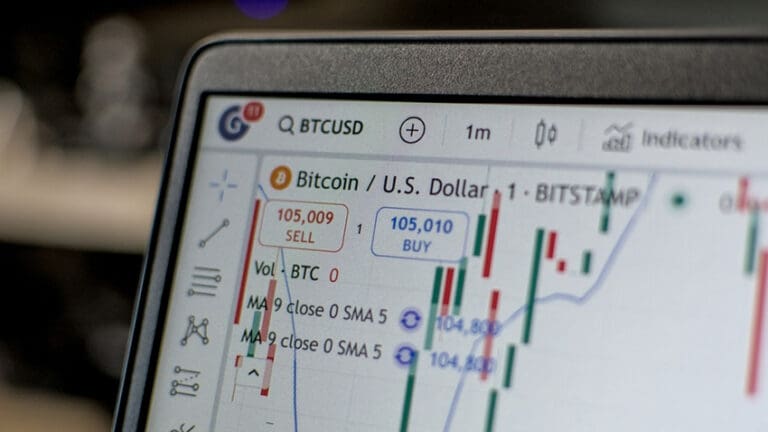
In volatile markets, the gap between people who last and people who blow up rarely comes down to who picks the best opportunities.
It comes down to how they handle risk. Cryptocurrency — one of the most volatile asset classes in existence — makes this lesson unusually clear: traders who ignore risk management tend to disappear quickly, while those who respect it survive long enough to let good decisions compound. The principles behind that discipline are not unique to crypto. They apply to any investor, founder, or business managing exposure to an uncertain market.
Survival comes before being right
The first job of any serious market participant is not to make money — it is to avoid catastrophic loss. The mathematics are unforgiving: a 50% loss requires a 100% gain just to break even, and a 90% loss requires a tenfold return. This asymmetry is why experienced traders treat capital preservation as the foundation of everything else. Good risk management isn’t about predicting the future; it’s about making sure that being wrong — which happens to everyone — never ends the game. In a market that can move 10% or 20% in a single day, that mindset is not optional.
Position sizing: the quiet core of the discipline
If risk management has one most important habit, it is position sizing — deciding how much of your capital to put behind any single idea. The professional approach is to define, in advance, the maximum you are willing to lose on one position, commonly one to two percent of your account, and then let that figure determine the size of the trade. It is a subtle inversion of how beginners think: instead of asking “how much could I make,” you start with “how much can I afford to lose.” Tools such as a position size calculator make this straightforward, translating your risk tolerance and stop distance into a precise position size. Done consistently, it ensures no single mistake can do lasting damage.
Define your downside before you enter
Alongside sizing, disciplined traders decide their exit before they enter. A predefined stop-loss caps a loss at a level you chose calmly, rather than one forced on you in a panic. This matters even more when leverage is involved: borrowing to amplify a position amplifies the losses just as fast, and can turn ordinary volatility into a threat to your entire stake. Whatever the instrument, knowing your worst-case outcome in advance is what separates calculated risk from gambling.
The lessons travel well beyond crypto
Strip away the jargon and these principles describe sound financial management anywhere. Don’t concentrate everything in one bet. Keep reserves for when conditions turn. Size your exposure to what you can afford to lose, not to what you hope to gain. And treat emotional discipline — resisting the urge to chase gains or to freeze in a downturn — as a skill worth practising. Crypto simply teaches these lessons faster, and more painfully, than most markets, because its swings leave so little room for error. For any business owner or investor weighing an uncertain opportunity, the first question worth asking is not how much there is to win, but how much there is to lose — and whether the balance sheet could withstand it.
Volatility isn’t going away, in crypto or anywhere else. But it is survivable, and even useful, for those who put risk first. The market participants who endure are not the ones who never lose; they are the ones who make sure a loss is never fatal. That is a lesson worth borrowing, whatever you invest in.
Disclaimer: This article is for informational purposes only and does not constitute financial advice. All investing and trading carries risk, including the loss of capital; always do your own research.